Key Themes:
Business, Wealth, Investment, Financial Education, Personal Finance
Summary:
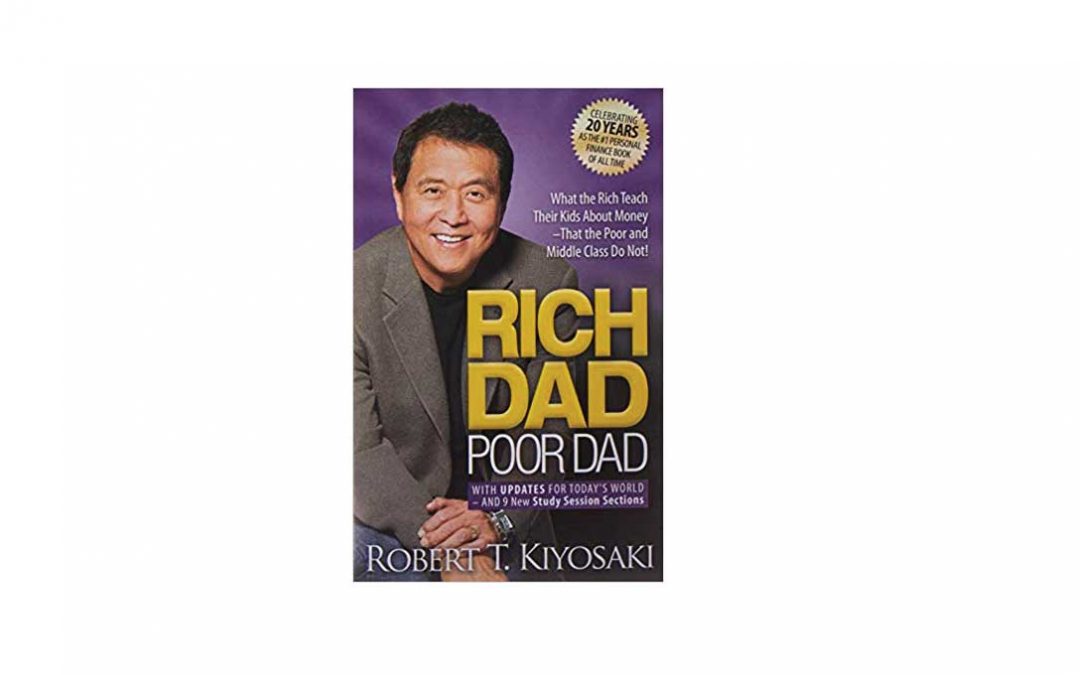
Rich Dad Poor Dad is Kiyosaki’s story of growing up with two dads — his real father and the father of his best friend Mike, his “rich” dad. The book centres on the ways in which both men shaped his thoughts about money and investing. The book explodes the myth that you need to earn a high income to be rich – especially in a world where technology, robots and a global economy are changing the rules. He challenges all your beliefs regarding your finances and explains the difference between working for money and having your money work for you.
Content Overview:
Originally released in 1997, Rich Dad, Poor Dad has been a landmark among personal finance books – a global best-seller that has sold nearly 40 million copies. Kiyosaki emphasises six key concepts throughout the book. These points — which differentiate between his “poor” dad (his real dad) and the “rich” dad that helped him understand business and become wealthy — are:
- The rich don’t work for money – they acquire assets, the poor and middle class acquire liabilities, but they think they are assets
- The importance of financial literacy
- Minding your own business – wealth is a person’s ability to survive so many number of days forward
- The history of taxes and the power of corporations
- The rich invent money
- The need to work to learn and not to work for money
As Kiyosaki mentions many times in the book, our traditional educational system is flawed and designed primarily to create employees – a negative influence for an entrepreneur. He bemoans the fact that financial literacy is something that is rarely discussed in school and that we can only agree with him on.
Rating: 8/10
I loved the principles that I learned in the book and the way it challenges conventional theory. I came away from it highly inspired, however, some of the examples he uses – specifically in property are hard to follow and apply. However, its concepts have lasted 20-years, it’s the number one personal finance book of all time and it definitely teaches you to think outside the box.
Readability: 9.5/10
Very readable – the almost autobiographical style flows really well and the viewpoints of both ‘dads’ are clearly evident. I’ve read this book multiple times and each time I get something new from it.
Does what it says on the tin: 9.5/10
Definitely – even if all it does is change your financial mindset on the difference between an asset and a liability!