
Branding is more than designing a logo! It is a process that communicates the unique value a business offers, what it stands for, it’s vision, values and personality – creating a unique name and image for the business and products in the mind of its consumers.
Great branding aims to establish a significant and differentiated presence in the market that attracts and retains loyal customers and creates raving fans.
The objective is to attract and retain loyal customers by delivering a product that is always aligned with what the brand promises.
Who does it affect?
A brand affects all those people who interact with it.
Consumers: It provides consumers with a decision-making-shortcut when comparing the same products from different companies.
Employees: It adds to a company’s reputation in the mind of employees and potential recruits. If you don’t like or don’t feel connected to a brand, you would probably not want to work for the Company. However, if you feel that the brand reflects your ethos and offers products that inspire and motivate you, you would probably like to work for it.
Shareholders/third-parties: In essence, great brands add value to the bottom line. They have an intrinsic presence in the mind of the consumer that generates loyal fans for the business and goes beyond standard measures such as price, product or promotion.
How can it be done?
Companies can use different tools to create and shape a brand. For example, branding can be achieved through:
- advertising and communications
- product and packaging design
- in-store experience
- pricing
- sponsoring and partnerships
The visual identity of the brand (logo, website and colours etc) are just part of the process of creating the brand – there is much more to it than that.
What are the important elements of branding?
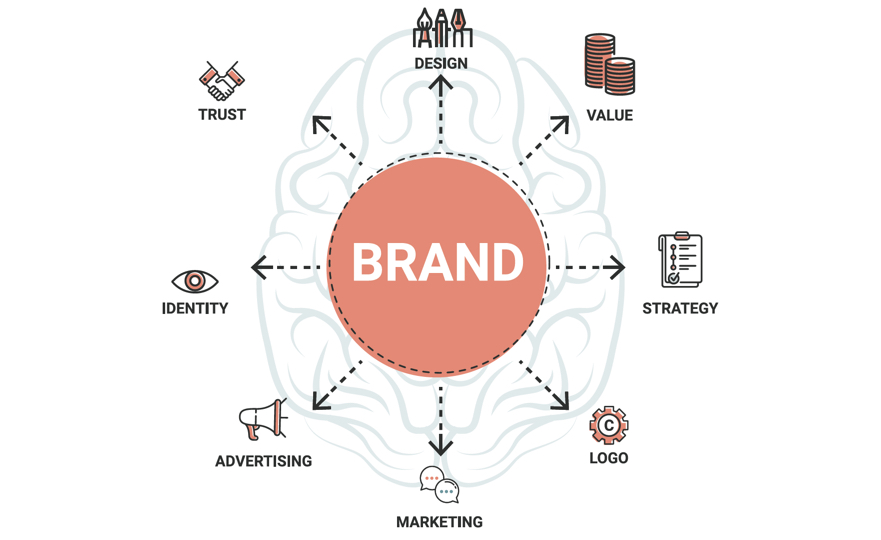
Brand identity
Let us start at the beginning – with what most people understand of branding. The brand starts with an easily recognisable name that immediately communicates what the company does. Brand identity is the way people see and remember the brand. It may be through the logo or other associated creative elements. For example, kids the world over can recognise the ‘golden arches’ logo of McDonalds – some even before they can read! They also know what they will get when they go there, and most of us can sing their strapline ‘I’m loving it’.
Brand image
Brand image is the visual image of the brand that people develop in their minds. It also dictates their expectations and how they expect to be treated by the brand. For instance, Rolls Royce has the image of an exclusive, luxury car maker. So, it cannot be seen to be manufacturing a budget car even if there is a market. It will dilute its brand image, and existing premium customers will not be happy. It can be difficult to change brand image, so it’s best to know your target audience and what you want to be before you start the process.
Brand positioning
Positioning is the way a product is placed in the market. It essentially outlines what segments of the market it is focused on targeting. For example, John Lewis focuses on the middle class, with quality products and their image of ‘never knowingly undersold’.
Brand personality
Brand personality works in the same way as the personality of human beings. It is certain emotional or personal qualities that we link with a particular brand. This is why many brands use celebrities that they feel resonate with their brand or have the personality of their brand to promote them. For example, we can associate Lorraine Kelly with Wayfair – the approachable and affordable online furniture brand. Every element of the brand identity including the colour of the logo and the typography on the brand name also adds to the personality.
Brand equity
Brand equity is the value of a brand and comprises two different elements. Firstly, the brand’s financial value such as market share and income and secondly intangible aspects such as the perceived benefits of recognition and loyalty to the brand. For example, Apple is a major technology brand, and people perceive it is a premium, innovative manufacturer of quality products. Customers are split between Apple and Android devices, and Apple customers are raving fans often queuing for days to get the latest smartphone or tablet. So, it is not only the sales but the sheer loyalty and power of the image that takes the equity to an altogether different level.
Brand experience
Brand experience is a combination of everything that a customer goes through while purchasing and using that brand. For example, the experience of ordering food and eating at KFC. How do the staff behave and how fast do they deliver, how does the menu differ and of course how did the food taste? Also, as a global business, each outlet is expected to maintain the same experience.
Brand Differentiation
Differentiation, as the word suggests is how a brand sets itself apart from other products. For example, Dell Computers sets itself apart from other PC manufacturers. It lets customers choose their components and assemble their own system, making it different from others who just sell pre-built machines at the shop with no scope for customisation.
Brand communication
Brand communication is the message it delivers through different marketing sources including adverts, brochures, straplines, websites etc. If the brand is looking to grow and establish itself, it must be able to communicate and demonstrate its core benefits to the customers clearly.
Brand gap
Brand gap is the difference between what a brand promises to do in its communications and what it actually delivers. For best results, the gap between the two should not be a big one. Successful brands are those that deliver on their promises. No amount of promotional marketing or activity can rescue a bad product or service.
Brand extension
Brand extension is going beyond its original products and extending the range of services and products it offers. For example, Google started as a search engine. However, now it has increased its range of services to include analytics, emails, online advertising etc. However, a brand can only do this if it’s compatible with its activities and its brand complements the newer initiatives. Google gained market intelligence through its search operations, and this is what enabled it to develop other services. Some brands mis-manage this spectacularly – for example, Colgate’s foray into ready meals went against their heritage as a toothpaste manufacturer and failed.
What are the pillars of branding?
The pillars of branding are the elements that create the brand and enable it to exist. We’ve outlined the core pillars below:
Purpose
Your brand purpose is the real reason for your brand’s existence. To understand your purpose, you need to look at whom you serve. Your business needs to solve a problem for someone. Whether that problem is hunger, thirst, a gift idea, a keepsake etc, you provide a solution to a problem your ideal customer needs or wants, to solve.
Vision
Your vision is where you see your business in the future. Thinking about where you want your company to be and what you want it to achieve is a vital part of brand creation. It is about fast-forwarding your brand into the future and painting a picture of what this will look like. When you go back to the brand purpose and realise that your brand is about impacting other people’s lives, you can be a little more ambitious about the future.
Mission
Your mission is a clear, written statement of intent that includes both your company’s purpose and vision. It is a commitment to impact the lives of the people you serve and deliver on what you promise. Everyone who works for you should be clear as to the mission and the part they play in it. It shifts the focus from what you want to achieve to what you want to give. In living your purpose, your mission becomes a self-fulfilling prophecy.
Values
Brand values are the code of conduct for the way you do business. They should be embedded into your business and be the way ‘we do things here’. Your values are the behavioural commitments in your day-to-day activities.
Position
The position your brand takes in the market comes down to some factors including your audience, competition, and what makes you unique. By analysing who your audience is, what they like or dislike and their behaviour, you can create a unique position for your business. When you understand what their problems are, then you can begin to understand the best way to attract them and solve them.
Personality
Brand personality needs to be authentic and should be a reflection of who your audience is and what appeals to them. Your audience wants to see themselves, associate with and resonate with your brand.
Tone of Voice & Language
Tone and language choices are by and large part of your personality and should mirror your audience. Consistency is key – your tone of voice and language should be the same across every channel and is more important than ever before in today’s content-driven era.
Core Message
Once you fully understand your audience, your position, and the personality of your brand, you can create an effective core message. In the mind of your audience, you get to be one thing. Your core message needs to be built around this.
Brand Identity
Your brand identity is the look and feel of your brand and consists of a collection of visual elements including your logo, fonts, colours and use of icons and imagery.
To summarise:
Branding is the process of giving a personality to a business and its products or services by creating and shaping it in the consumers’ minds. It is a strategy that companies use to help people to quickly identify and differentiate their products and organisation and gives them a reason to choose their products over the competition’s, by clarifying what this particular brand does and does not stand for.


